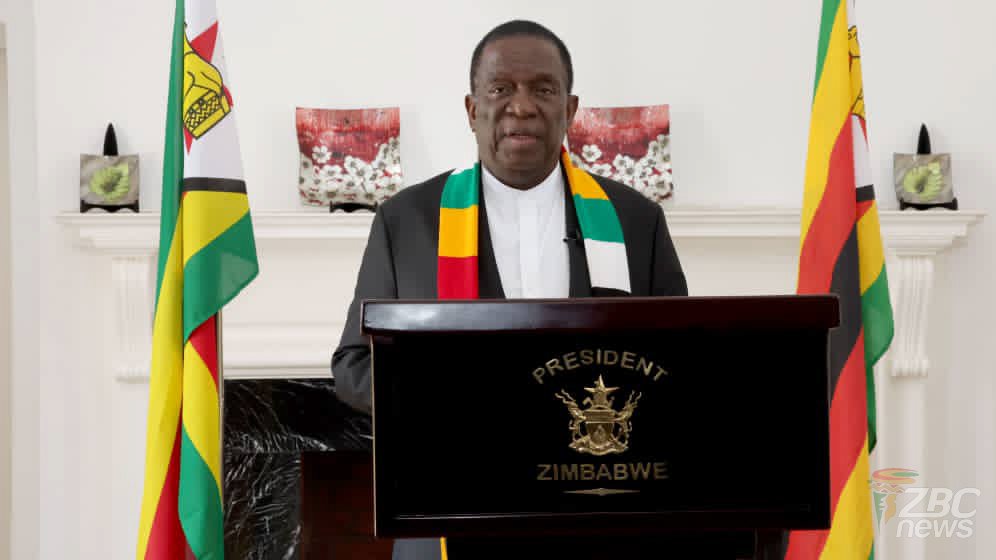
President Emmerson Mnangagwa this week announced yet another so-called “mega deal” with China, revealing a US$600 million agreement with China Railway International Group (CRIG) aimed at rehabilitating Zimbabwe’s failing railway system. While the announcement was heralded by government officials as a transformative step for the National Railways of Zimbabwe (NRZ), historical precedent offers little reason for optimism.
Since the early 2000s, when Zimbabwe adopted its “Look East Policy,” the country has repeatedly showcased billion-dollar agreements with Chinese companies—projects that often fail to deliver meaningful benefits for ordinary Zimbabweans. Instead, the deals have consistently enriched ruling elites while leaving the nation’s infrastructure in disrepair.
Perhaps the most infamous example is the looting of Marange (Chiadzwa) diamonds. Billions of dollars’ worth of gems were extracted under Chinese joint ventures involving companies like Anjin Investments and other opaque entities. Rather than financing hospitals, schools, or public infrastructure, much of the wealth vanished into offshore accounts, Zanu PF patronage networks, and the pockets of political and military elites. In exchange, Zimbabwe reportedly received firearms, water cannons, and tear gas—tools used to suppress dissent.
Mnangagwa, who played a significant role during the early years of Marange diamond exploitation, now presides over a new cycle of “resource-for-debt” agreements. Critics argue that these deals are designed primarily to benefit him, his close allies, and even his sons, who have increasingly appeared in business ventures linked to Chinese investors.
The latest CRIG railway deal seems to follow the same pattern. Finance Minister Mthuli Ncube described the company, a subsidiary of Fortune 500 giant China Railway Group Limited (CREC), as a “serious partner” poised to modernize NRZ. He spoke of feasibility studies, financing models, and alignment with regional rail gauge standards—grand promises reminiscent of the pledges made under Robert Mugabe’s administration, many of which never materialized.



Mnangagwa Unveils Another $600 Million Chinese Railway Deal Amid Historical Skepticism
“Once you develop the NRZ infrastructure, that will lower the cost of logistics, the cost of doing business in Zimbabwe. It will save our roads,” Ncube told reporters, adding that a final agreement could be signed within four months. Yet for Zimbabweans, such assurances have become routine. In 2018, Mnangagwa returned from China with 17 “high-impact” agreements, including plans to recapitalize NRZ and construct a railway between Harare and Chitungwiza. Six years later, little progress is evident. Roads continue to crumble, industries stall, and mining companies haul millions of tonnes of ore along overstretched highways.
Instead of fostering genuine development, critics argue, Zimbabwe’s leadership has used Chinese agreements to mask resource exploitation and elite accumulation while ensuring political survival. The pattern extends beyond railways. In the same week as the CRIG announcement, Mnangagwa met with Huawei executives, promising expanded ICT investment and the rollout of artificial intelligence technologies. Huawei, which has operated in Zimbabwe for 26 years, has established deep connections with the ruling establishment despite ongoing concerns over surveillance, digital authoritarianism, and data security.
Observers note that the overarching dynamic is clear: Zimbabwe exchanges its vast mineral wealth—including gold, lithium, and diamonds—for debt, opaque contracts, and repressive technology, while ordinary citizens continue to grapple with poverty. Each high-profile agreement is accompanied by grand rhetoric and promises of economic transformation, but on the ground, Zimbabweans see little improvement in infrastructure, public services, or economic opportunities.
Analysts warn that without accountability, transparency, and robust oversight, the country risks perpetuating a cycle of resource exploitation that primarily benefits a narrow elite. Deals like the latest CRIG agreement are likely to serve as instruments for political consolidation rather than genuine national development. Meanwhile, citizens remain dependent on deteriorating roads, unreliable rail systems, and overstretched public services.
In conclusion, while Mnangagwa’s announcement of a US$600 million railway deal with China has been presented as a step toward modernizing Zimbabwe’s transport infrastructure, the historical record raises serious questions about its potential to deliver meaningful results. Past Chinese agreements have enriched elites, facilitated resource plunder, and failed to improve the lives of ordinary Zimbabweans. Without transparency, oversight, and genuine commitment to public welfare, the latest railway deal may follow the same path, promising progress while delivering little to the nation that most needs it.
Source- ZimEye